
AI is slow. Don’t believe the hype

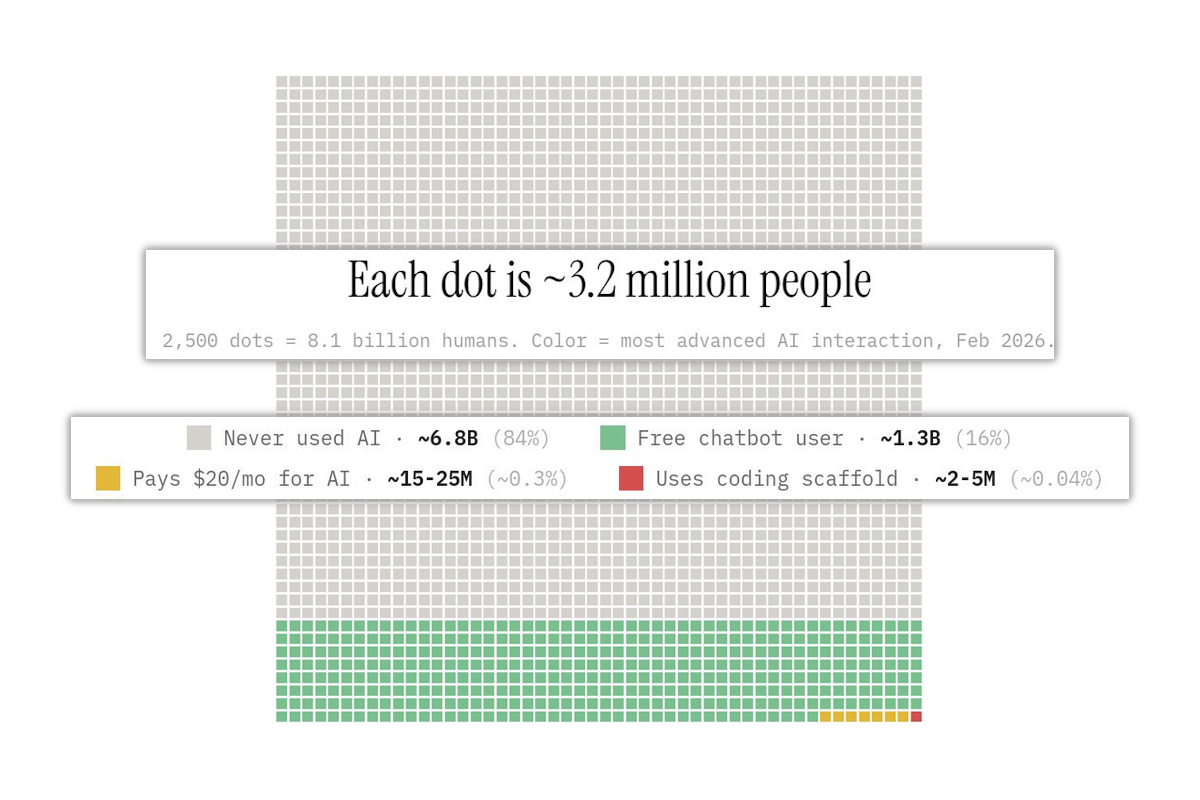
A few weeks back this image went viral in business and tech circles:
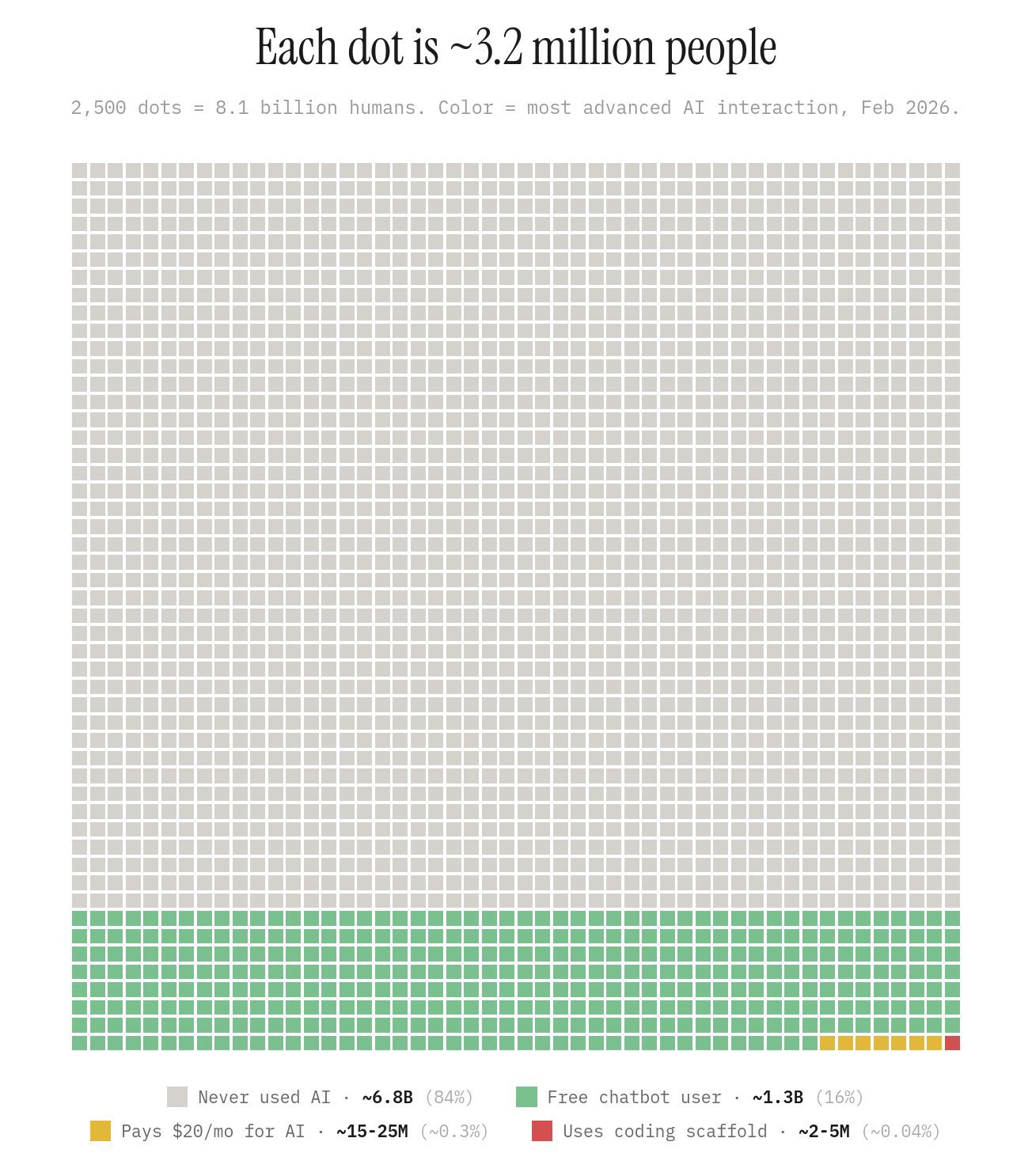
It shows how small is the actual amount of people who know about AI, and use paid tiers of models.
It once again reignited the discussions about the “AI bubble”.
With some people claiming that this is the proof of it.
And others saying that this is instead the proof of the insane potential that AI has.
Another discussion within the bubble discourse is the ability of people like Sam Altman to raise unimaginable amounts of money for their vision and claims.
And yet another discussion is hype, and how much all this AI craze/panic is just tech social media circles screaming to each other in a giant echo chamber. While so called normal people don’t use 99.9% of AI stuff and have no idea at all.
Many of these things are facts.
- There is a ton of AI hype that people outside of tech social bubble never encountered
- AI valuations are really questionable, even if there are growing earnings
- Sam Altman knows how to raise capital
And it’s good that we have a discussion about these facts.
But for me, the biggest thing that this image made me remember - is the amount of times that AI influencers (including Altman) would claim some crazy near-future progress.
AGI.
Superintelligence.
Agentic workforce, and so on.
The reality of the last ~4 years looks different.
Companies started laying off thousands of people, because AI can significantly increase productivity of certain workers.
But not everyone has been able to do that yet. And some companies already rolled back their AI initiatives.
Autonomous agentic systems are just starting to appear. But almost no one knows how to actually use them in their business.
OpenClaw has enormous amounts of hype. Yet even AI-savvy founders, who are ultra excited about it, struggle to find practical business use besides fun.
Of course some people will get results, while others don’t. It’s completely normal for technology.
But that’s the point - AI so far is just another technology.
Sure, it creates new opportunities and new ways to solve problems.
But people who claim it’s already bigger than the Internet sound delusional.
Can it become bigger? Maybe.
And I truly believe that we will see something crazy.
But any specific timeframe claims sound stupid.
No matter if they say 3 months, 2 years or 10 years.
AI is slow.
It doesn’t mean that it will stay slow.
Like I said in my first article - the main thing that viral launch of ChatGPT has uncovered is that absolute majority of people have no idea what technological progress is happening and what to expect in the future.
No one knows.
Not researchers, because there are no magic prediction tools.
Not AI influencers, because they don’t even read research papers.
And certainly not visionaries like Altman, because it’s not their objective.
With the rise of AI labs all over the world, it’s only natural to expect some kind of acceleration.
AI will get faster.
And we don’t know when.
We don’t know how much faster.
We don’t know how will architectures change.
We don’t know how interfaces will change.
But I find it very hard to believe that we will forever continue to use LLM chat bots to ask about cookie recipes and LinkedIn captions, and never evolve into a much more complex system.
There will be the era of AI, where agents are a normal part of everyday life and business.
We aren’t in it right now.
And you don’t need to wait for it.
The opportunities that we have right now are already big enough to start trying things out.
And not just trying once, but getting better at it, constantly.
Even if LLMs are not the future, and current AI will look like Stone Age in a few years - right now this is cutting edge.
If you don’t use it in your business, your competitors will. And they will benefit.